
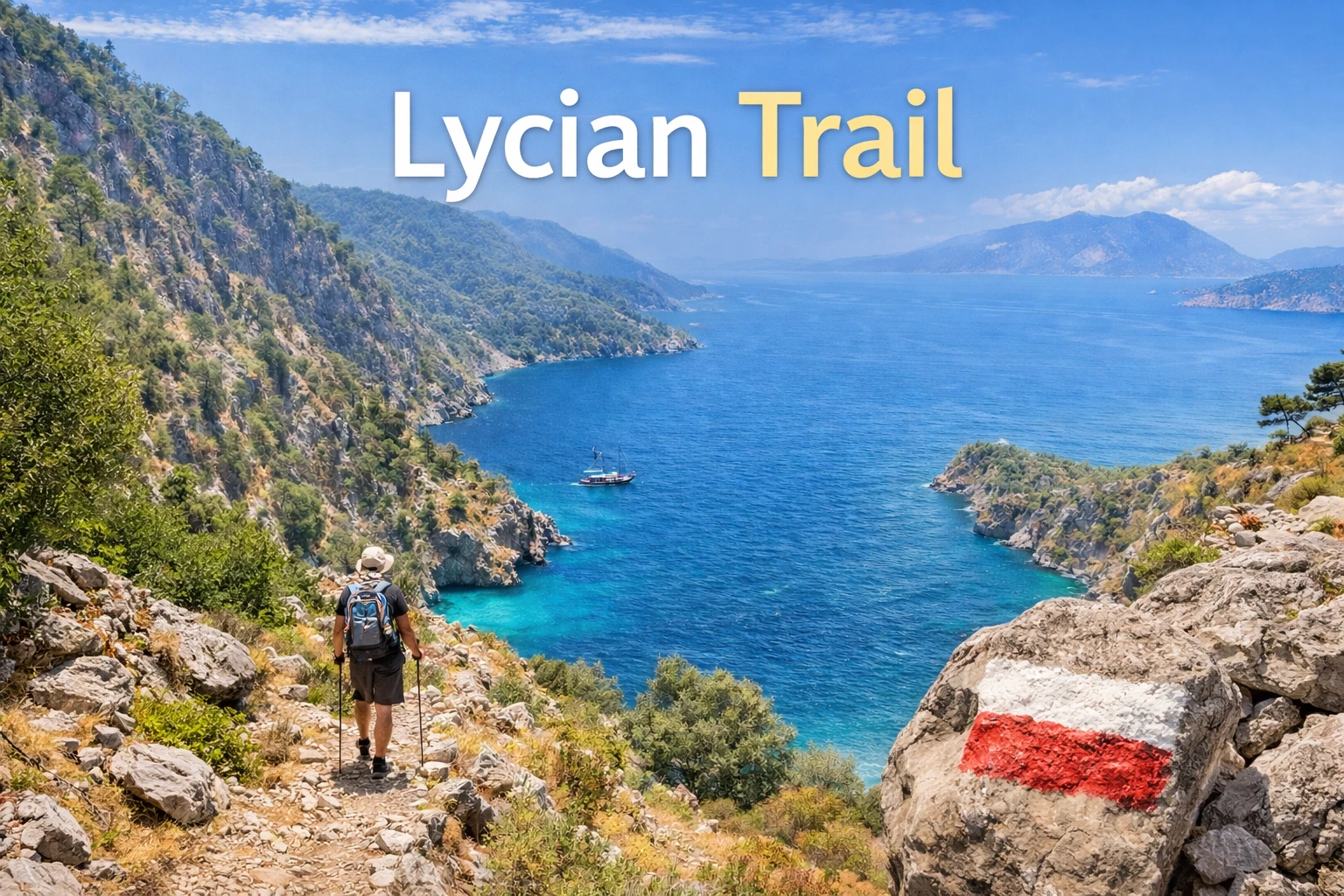
Lycian Trail: Walking Where Mountains Meet the Mediterranean
There’s a moment on the Lycian Trail when you stop thinking about distance, elevation, or how many kilometers are left.
It usually happens somewhere above the Mediterranean — when the sea stretches endlessly below you, the wind carries the scent of pine and salt, and the only sound is your own breathing.
That’s when you understand why people travel across the world to walk this trail.
It’s not just about completing a route or reaching a destination. It’s about stepping out of the noise of everyday life and into something far more raw and real. Each step feels slower, more intentional. Time seems to stretch, and for a while, nothing else matters except the path beneath your feet and the horizon ahead.
Along the way, you pass through ancient ruins that whisper stories from thousands of years ago, quiet villages where life moves at its own rhythm, and hidden coves where the water is impossibly clear. There’s a sense that you’re not just walking through a landscape, but through layers of history, culture, and nature all at once.
And as the trail unfolds, you begin to notice the small things — the changing colors of the sea, the texture of the rocks beneath your boots, the way the light shifts as the sun moves across the sky. These moments stay with you, long after the hike is over.
By the time you finish your day, tired but fulfilled, you realize the Lycian Trail is more than just a hike. It’s an experience that resets your mind, reconnects you with nature, and reminds you how simple and powerful it is to just walk.
What Makes the Lycian Trail So Special?
The Lycian Trail runs along Turkey’s southwestern coastline, connecting Fethiye and Antalya through a dramatic mix of mountain paths, coastal cliffs, ancient ruins, and traditional villages.
But describing it like that almost feels too simple.
Because the Lycian Trail isn’t just scenic — it’s layered.
One day you’re hiking above turquoise coves that look like postcards. The next, you’re passing through centuries-old olive groves. Then suddenly, you’re standing in the middle of an ancient amphitheater with no ticket booth, no crowds — just silence and stone.
It feels raw. Authentic. Undiscovered.
Walking Through History
The name “Lycian” comes from the ancient Lycian civilization that once ruled this region. As you follow the red-and-white trail markers, you pass tombs carved into cliffs, Roman roads still visible beneath your boots, and ruins that have quietly watched over the coastline for thousands of years.
On the Lycian Trail, history isn’t something you visit.
It’s something you walk through.
There’s something grounding about that — a reminder that long before hiking became trendy, these paths connected real communities, trade routes, and everyday life.
A Trail That Feels Personal
One of the things I love most about the Lycian Trail is how personal it feels.
It’s not overdeveloped. You won’t find souvenir shops at every turn. Instead, you’ll find small family-run guesthouses where dinner is homemade and conversations stretch long into the evening.
You’ll meet other hikers from different countries, all moving at the same human pace. No rush. No noise. Just the simple rhythm of walking.
And the terrain? It keeps you humble.
Some sections are steep and rocky. Others are gentle coastal paths where you can hear waves crashing below. Every climb is rewarded with a view that makes you forget the effort.
Do You Have to Walk It All?
The full Lycian Trail stretches roughly 540 kilometers, and completing it can take a month or more. But most people don’t walk the entire route in one go.
A 3–5 day section is often enough to experience its magic. Some hikers choose coastal stretches near Ölüdeniz for dramatic sea views. Others prefer quieter inland sections where village life feels unchanged by time.
There’s no “right” way to walk the Lycian Trail.
That’s part of its beauty.
Why the Lycian Trail Stays With You
Long after you leave, the trail lingers.
It might be the memory of swimming alone in a hidden cove.
Or the sound of goat bells echoing through the hills.
Or the simple satisfaction of reaching a ridge under your own power.
The Lycian Trail isn’t about luxury.
It’s about space.
It’s about perspective.
It’s about slowing down enough to notice the world again.
And in today’s fast-moving world, that might be the greatest journey of all

Comment (0)