
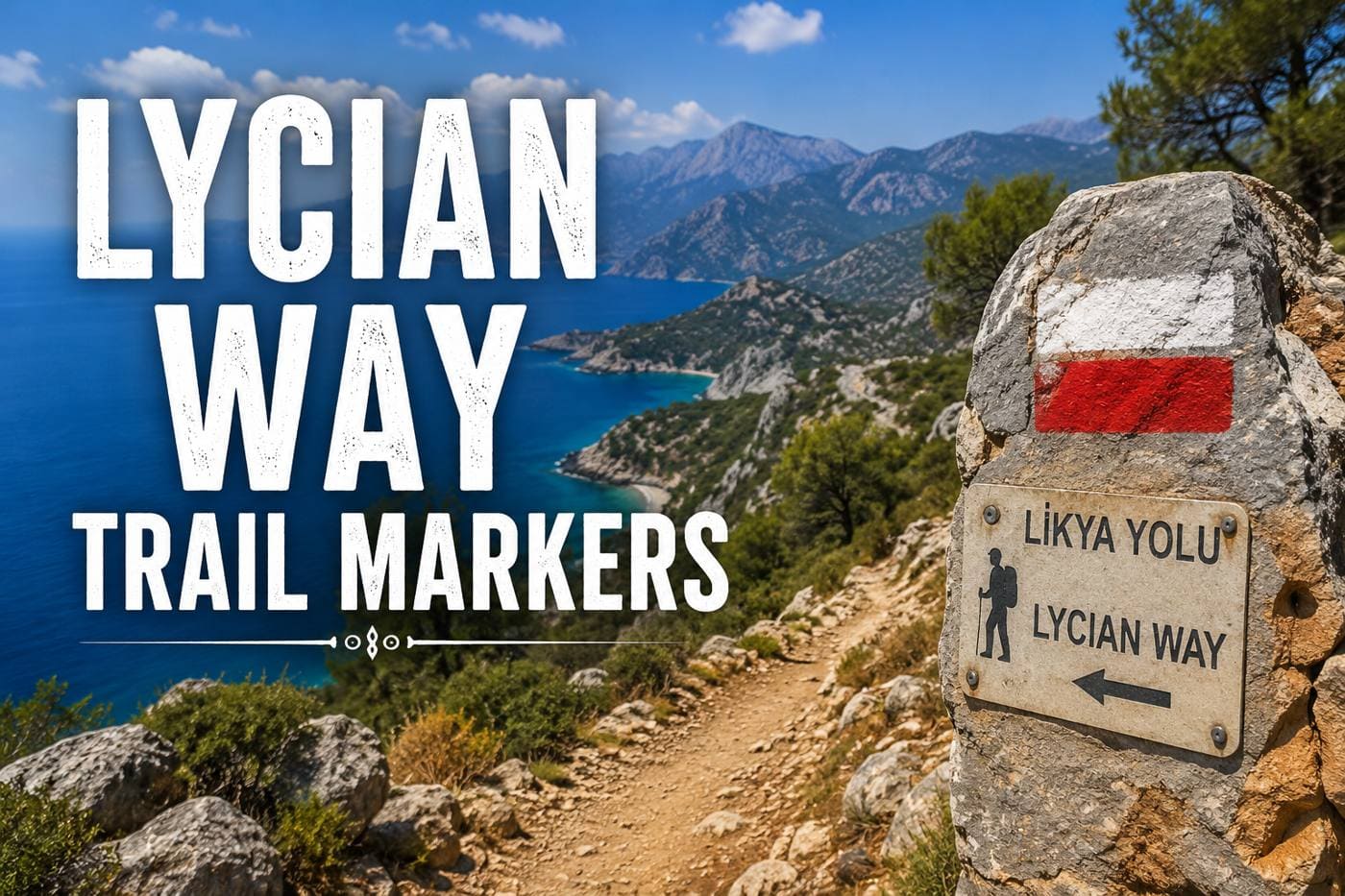
Lycian Way Trail Markers
Lycian Way Trail Markers
The Lycian Way is one of the world’s most celebrated long-distance hiking routes, stretching along Türkiye’s stunning Mediterranean coastline. From dramatic cliffs to ancient ruins, the trail offers an unforgettable experience for both seasoned trekkers and casual walkers. However, navigating this historic route would be far more challenging without its well-established trail markers. In this guide, we’ll explore everything you need to know about Lycian Way trail markers and how to use them effectively.
What Are Lycian Way Trail Markers?
The Lycian Way is marked using a simple yet highly effective system of painted signs. These markers are designed to guide hikers safely along the route, even in remote or rugged terrain. The standard marker consists of two horizontal stripes: one red and one white. These colors are easy to spot against natural backgrounds such as rocks, trees, and stone walls.
The red-and-white markings are part of an international trail marking system commonly used across long-distance hiking routes in Europe. On the Lycian Way, they are carefully placed at regular intervals to ensure that hikers can stay on track without needing constant reference to maps or GPS devices.
Types of Trail Markers You’ll Encounter
While the red-and-white stripes are the most common markers, there are a few variations you should recognize:
- Standard Marker (Red and White Stripes): Indicates that you are on the correct path. Continue following the trail in the same direction.
- Double Marker or Frequent Markings: When markers appear more frequently, it usually means the path may be unclear or requires extra attention.
- Crossed Marker (X Shape): Signals that a particular path is incorrect. If you see this, turn back and look for the correct route.
- Directional Arrows: Sometimes you’ll find arrows pointing left or right, especially at junctions or forks in the trail.
Understanding these variations is essential for avoiding wrong turns and staying safe during your hike.
Where Are the Markers Placed?
Trail markers on the Lycian Way are typically painted on natural surfaces such as rocks, trees, and occasionally man-made structures like walls or signposts. In open areas, markers are often placed on large rocks or visible points to guide hikers across less-defined terrain.
In forested or more complex sections, markers may appear more frequently to ensure you don’t lose your way. At critical points—such as intersections, sharp turns, or confusing terrain—you’ll usually find clearer or additional markings.
How Reliable Are the Markers?
Generally, the Lycian Way is very well marked, thanks to ongoing maintenance by volunteers and local organizations. However, hikers should be aware that conditions can change. Weather, erosion, or human activity may occasionally damage or obscure markers.
For this reason, it’s always wise to carry a backup navigation method, such as a detailed map, guidebook, or GPS app. While the markers are reliable, relying solely on them without preparation is not recommended.
Tips for Following the Trail Markers
To make the most of the Lycian Way’s marking system, consider the following tips:
- Stay Alert: Always keep an eye out for the next marker. If you haven’t seen one for several minutes, stop and retrace your steps.
- Look Ahead: Markers are often placed within sight of each other. Once you spot one, try to locate the next before moving forward.
- Be Cautious at Junctions: Pay extra attention when paths split. Look carefully for arrows or crossed markers.
- Start Early: Good lighting makes markers easier to spot, especially in rocky or shaded areas.
- Use Technology as Backup: Apps and offline maps can be invaluable if markers are unclear.
Why Trail Markers Matter
Trail markers are more than just navigation tools—they are essential for preserving the hiking experience. They allow hikers to explore the Lycian Way independently while minimizing environmental impact. By guiding walkers along established paths, markers help protect the surrounding landscape and archaeological sites.
Additionally, they contribute to safety. In a region where mobile signal can be limited and terrain can be challenging, clear markings reduce the risk of getting lost.

Comment (0)