
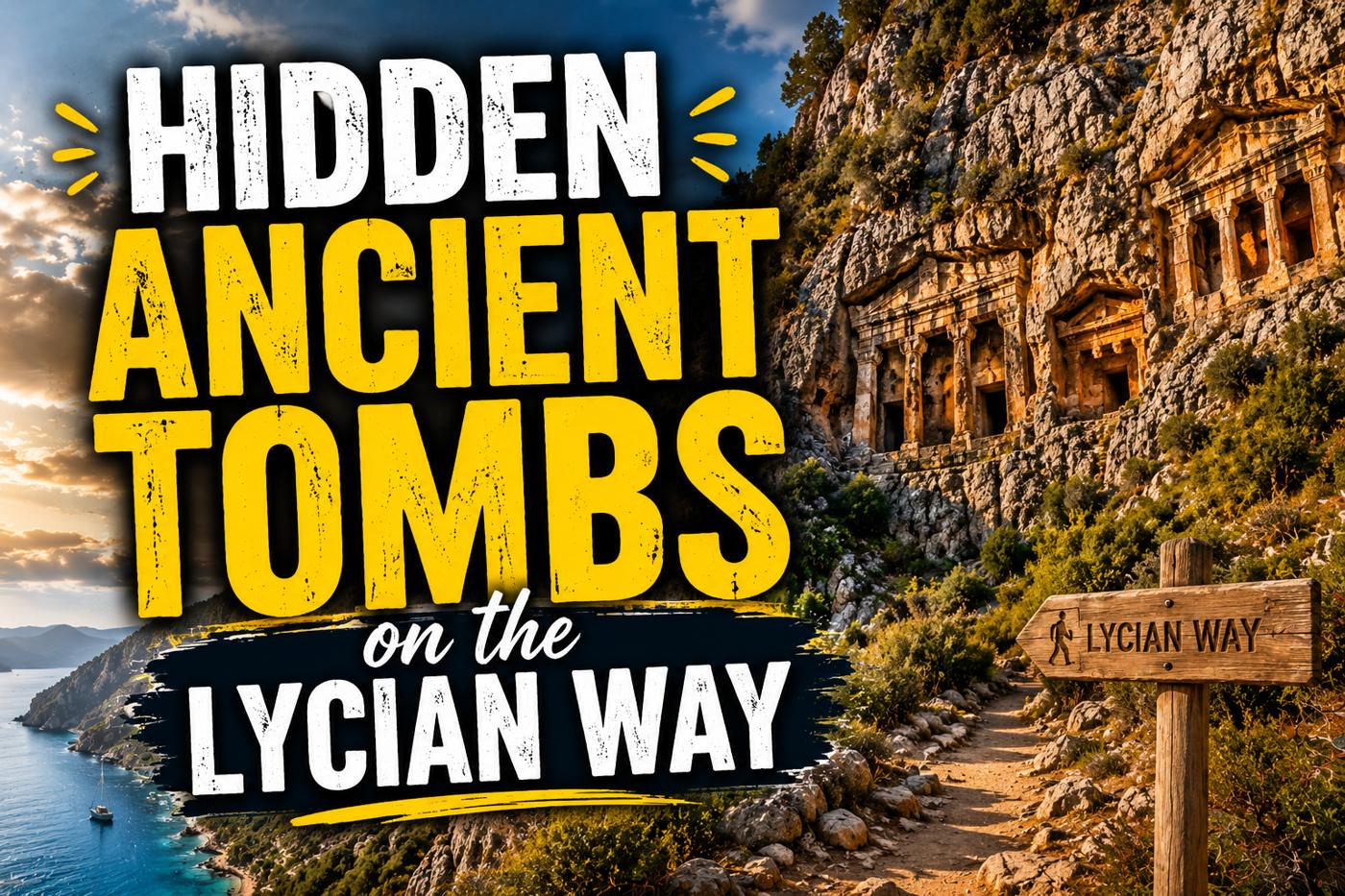
Hidden Ancient Tombs on the Lycian Way
The Lycian Way is famous for its turquoise coastline, dramatic cliffs, mountain villages, and hidden beaches. But one of the most fascinating parts of the trail lies hidden quietly beside the paths themselves:
ancient Lycian tombs carved into rock thousands of years ago.
Unlike modern cemeteries or monumental archaeological parks, many of these tombs appear unexpectedly in remote places:
- beside hiking trails
- above sea cliffs
- inside forests
- hidden among olive trees
- carved directly into mountainsides
Some are famous.
Many are almost completely forgotten.
And discovering them while hiking creates one of the most unique experiences anywhere on the Mediterranean coast.
Because on the Lycian Way, history is not separated from nature —
it lives inside the landscape itself.
Who Were the Lycians?
The Lycians were an ancient civilization that lived along the southwestern coast of modern-day Turkey thousands of years ago.
They built:
- independent cities
- mountain settlements
- trading ports
- monumental tombs
throughout the region now crossed by the Lycian Way.
The civilization became especially famous for its unique burial architecture.
Unlike many ancient cultures, the Lycians often carved tombs directly into:
- cliffs
- rock faces
- mountainsides
creating dramatic structures that still survive today.
Many historians believe the Lycians chose elevated tomb locations because they believed the soul could rise more easily toward the heavens.
That is why many tombs appear impossibly high above valleys and coastlines.
1. The Cliff Tombs of Myra
The most famous Lycian tombs are located near:
- Myra
- Demre
These enormous rock-cut tombs are carved directly into vertical cliffs overlooking the ancient city below.
The scale feels unbelievable in person.
Entire temple-like facades appear sculpted into solid stone walls high above the landscape.
The tombs include:
- columns
- carved entrances
- decorative reliefs
- intricate stone architecture
all created thousands of years ago using primitive tools.
At sunset, golden light hitting the cliffs creates one of the most surreal historical landscapes on the Lycian coast.
2. Hidden Tombs Near Kaş
Many hikers exploring the Lycian Way near:
- Kaş
- Limanağzı
- coastal sections toward Aperlai
unexpectedly discover small Lycian tombs hidden beside the trail.
Unlike major archaeological sites, these tombs often appear without:
- fences
- signs
- crowds
Some stand quietly beside olive trees overlooking the sea.
Others remain partially hidden beneath vegetation and rocky hillsides.
This creates a feeling of real discovery rarely found in modern tourism.
You are not visiting a museum.
You are finding forgotten history during the hike itself.
3. The Sarcophagi of Simena and Kekova
The:
- Kekova
- Kaleköy
- Simena
region contains some of the most atmospheric Lycian tombs on the entire coastline.
Here, ancient stone sarcophagi stand directly beside:
- the sea
- village pathways
- ruined castles
- fishing boats
The contrast feels unreal.
Some tombs appear partially submerged near the coastline due to earthquakes and shifting sea levels over centuries.
Walking through Kaleköy feels like moving between:
- ancient civilization
- Mediterranean village life
- coastal ruins
all at the same time.
4. Forgotten Tombs Hidden in Forests Near Olympos
Around:
- Olympos
- Çıralı
many Lycian ruins remain hidden beneath dense forest vegetation.
Unlike dramatic cliff tombs, these burial sites feel mysterious because nature slowly reclaimed them over centuries.
Stone tombs appear between:
- giant trees
- vines
- jungle-like pathways
Some are barely visible unless hikers explore carefully.
The atmosphere here feels completely different from open archaeological sites.
Quiet.
Humid.
Ancient.
Almost unreal.
5. The Remote Tombs Near Sidyma
One of the lesser-known areas on the Lycian Way is:
- Sidyma
a quiet mountain village surrounded by ancient ruins and forgotten Lycian structures.
Here, tombs stand beside:
- village houses
- mountain paths
- olive groves
blending naturally into everyday life.
Because tourism remains limited, the atmosphere feels authentic and untouched.
Many travelers describe Sidyma as one of the places where the Lycian Way feels most connected to its ancient past.
6. Hidden Rock Tombs Between Alınca and Kabak
Some hikers focusing only on coastal views completely miss the smaller tombs hidden along mountain sections near:
- Alınca
- Kabak Valley
- Faralya
The terrain here contains isolated ruins carved into rocky hillsides overlooking the Mediterranean.
Some tombs are difficult to notice because they blend naturally into the cliffs.
Finding them unexpectedly during steep hiking sections creates an incredible feeling of exploration.
Why Lycian Tombs Feel Different From Other Ancient Ruins
Many historical sites around the world feel heavily commercialized.
But Lycian tombs often remain:
- isolated
- silent
- naturally integrated into the landscape
You encounter them while:
- hiking mountain paths
- swimming near hidden coves
- walking through forests
- exploring remote villages
That changes the experience completely.
The ruins feel alive because they are still part of the environment rather than separated behind barriers.
The Mystery Behind Lycian Burial Culture
One reason Lycian tombs fascinate travelers is because they still feel mysterious.
Historians continue studying:
- Lycian beliefs
- burial rituals
- symbolism
- architecture
Many tombs were designed to resemble:
- wooden houses
- temples
- elevated sanctuaries
Some structures contain:
- inscriptions
- carvings
- symbolic figures
that remain partially undeciphered even today.
This mystery adds another layer to the experience.
Best Time to Explore the Tombs
The ideal seasons are:
- Spring
- Autumn
Especially:
- April
- May
- October
During these months:
- temperatures remain comfortable
- lighting becomes perfect for photography
- hiking conditions improve significantly
Early morning and sunset create the most dramatic atmosphere around the tombs.
Tips for Visiting Ancient Tombs Respectfully
These sites are extremely important historical remains.
Visitors should:
- avoid climbing on structures
- never remove stones or artifacts
- respect protected areas
- avoid damaging carvings
Many tombs survived for thousands of years because of their isolation.
Preserving them matters.
Why Hidden Ancient Tombs on the Lycian Way Unforgettable
The hidden tombs along the Lycian Way transform the trail into something far more meaningful than a simple coastal hike.
Because here, history is not locked inside museums.
It appears suddenly beside the trail itself:
above the sea,
inside forests,
next to villages,
and carved into cliffs that have watched over the Mediterranean for centuries.
These ancient structures remind hikers that the Lycian Way is not only a route through landscapes.
It is a journey through an entire lost civilization.
And sometimes the quietest ruins become the most unforgettable places of all. You can click here to go on tours.

Comment (0)