
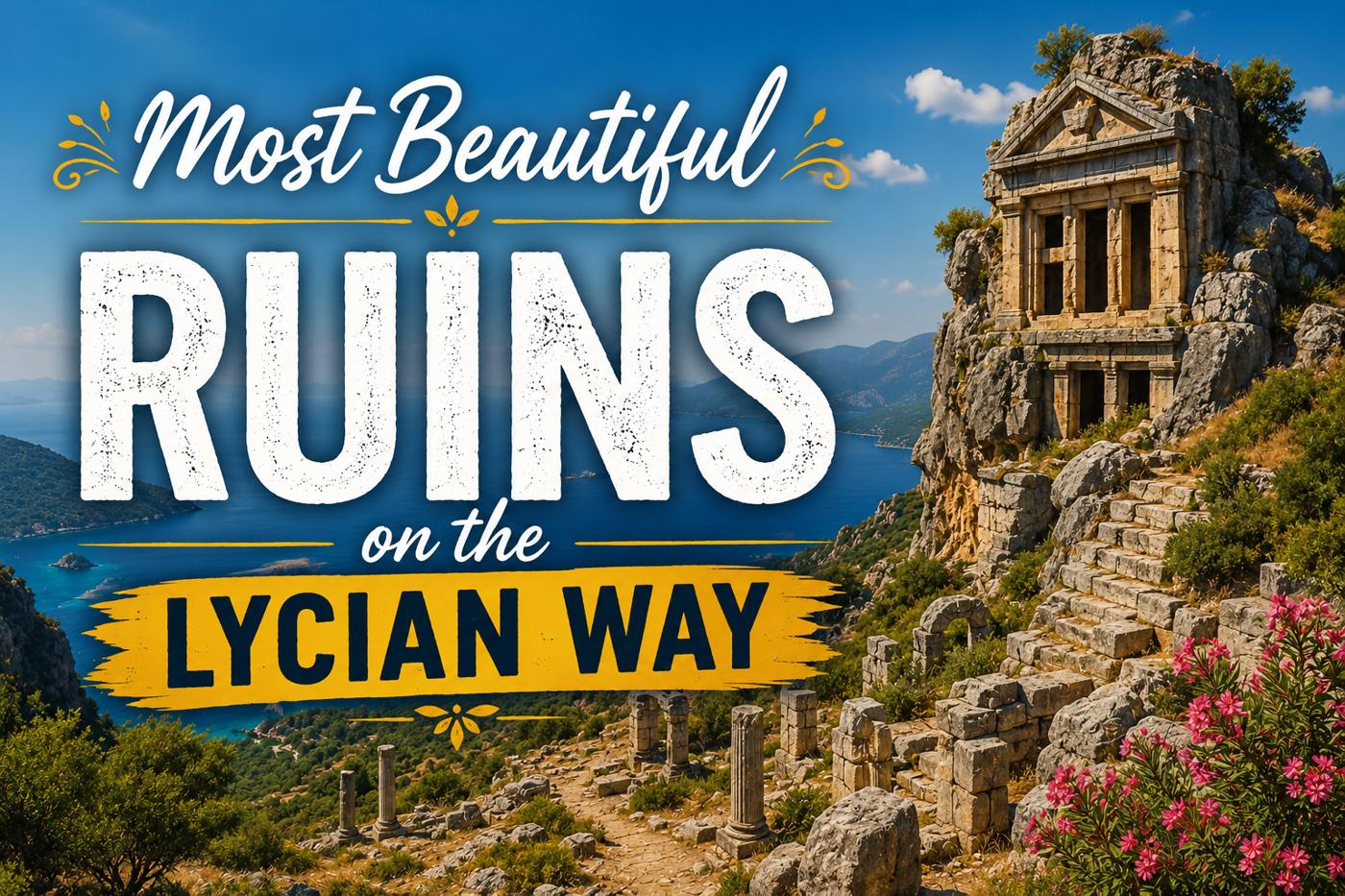
Most Beautiful Ruins on the Lycian Way
The Lycian Way is not only one of the world’s most beautiful hiking routes — it is also one of the most historically fascinating. Stretching along Turkey’s Mediterranean coastline between Fethiye and Antalya, the trail passes directly through the heart of the ancient Lycian civilization.
Unlike many famous archaeological sites hidden behind fences and ticket gates, the ruins along the Lycian Way often appear unexpectedly beside hiking trails, mountain villages, forests, and sea cliffs. One moment you are walking through pine trees, and the next you are standing beside a 2,000-year-old tomb overlooking the Mediterranean Sea.
This combination of:
- hiking
- history
- nature
- ancient architecture
is what makes the Lycian Way truly unique.
Here are some of the most beautiful ruins on the Lycian Way that every traveler should discover.
1. Patara – The Ancient Capital of Lycia
Patara is one of the most important and impressive archaeological sites on the entire Lycian Way.
Once the capital of the Lycian League, this ancient city was a major political and maritime center thousands of years ago.
Today, visitors can explore:
- a massive ancient theater
- parliament building ruins
- Roman baths
- ancient roads
- temples
- triumphal arches
What makes Patara especially unique is its location beside:
- enormous sand dunes
- Patara Beach
- Mediterranean coastline
The atmosphere feels cinematic, especially during sunset when ancient ruins glow under golden light.
Patara is also believed to be the birthplace of:
- Saint Nicholas
the historical figure who inspired Santa Claus.
2. Xanthos – A UNESCO World Heritage Site
Xanthos was one of the most powerful cities of the Lycian civilization.
Today, it is recognized as:
- a UNESCO World Heritage Site
because of its historical importance and extraordinary ruins.
The site contains:
- massive stone tombs
- Lycian pillars
- theater ruins
- Byzantine remains
- ancient inscriptions
One of the most famous structures is the:
- Harpy Tomb
a monumental pillar tomb decorated with ancient carvings.
Xanthos also carries a dramatic history.
The city became famous for the legendary resistance of its inhabitants, who reportedly chose death over surrender during invasions.
Walking through Xanthos feels both beautiful and haunting.
3. Myra – Rock Tombs Carved Into Cliffs
Myra is one of the most visually spectacular archaeological sites on the Lycian coast.
The ancient city is famous for:
- giant rock-cut tombs
- Roman theater
- cliffside architecture
The tombs appear carved directly into vertical mountain walls overlooking the ancient city below.
This dramatic design was intentional.
Ancient Lycians believed:
the higher the tomb, the closer the soul would be to heaven.
The massive Roman theater below the cliffs remains remarkably well preserved.
Myra is also historically connected to:
- Saint Nicholas
who served as bishop in this region centuries ago.
4. Simena Castle – Ruins Above the Sea
Simena (modern-day Kaleköy) may offer one of the most beautiful ruin locations anywhere on the Mediterranean coast.
The ruins sit above:
- turquoise bays
- small islands
- Kekova coastline
creating breathtaking panoramic views.
The castle itself contains:
- ancient walls
- stone pathways
- small amphitheater ruins
Unlike many archaeological sites, Simena still feels alive because modern village life exists directly beside the ancient structures.
The combination of:
- sea views
- fishing boats
- ancient stone ruins
creates an unforgettable atmosphere.
5. Aperlai – Hidden Ruins Beside the Water
Aperlai is one of the hidden gems of the Lycian Way.
Unlike larger tourist sites, Aperlai feels isolated and mysterious.
The ruins are accessible mainly by:
- hiking
- kayak
- boat
which helps preserve their untouched atmosphere.
Visitors can explore:
- ancient harbor walls
- stone ruins
- old pathways
- partially submerged structures
all surrounded by Mediterranean nature.
Many hikers discover Aperlai unexpectedly while walking coastal sections near Kekova.
That sense of discovery makes the experience even more powerful.
6. Letoon – The Sacred Religious Center
Located near Xanthos, Letoon was one of the most important religious centers of ancient Lycia.
The site was dedicated to:
- Leto
- Apollo
- Artemis
and contains:
- temple ruins
- sacred structures
- ancient inscriptions
- ceremonial spaces
Unlike dramatic cliffside ruins, Letoon feels quieter and more spiritual.
The peaceful surroundings create a very different atmosphere compared to larger archaeological sites.
Together, Xanthos and Letoon form one of the most historically important areas on the Lycian coast.
7. Olympos – Ancient Ruins Hidden in the Forest
Olympos offers one of the most unique ruin experiences on the Lycian Way.
Instead of standing isolated in open landscapes, the ruins here are hidden inside:
- dense forest
- riverside vegetation
- jungle-like scenery
Walking through Olympos feels almost surreal.
Ancient stone ruins appear between:
- giant trees
- vines
- river paths
The site includes:
- ancient tombs
- Roman baths
- temples
- stone bridges
- theater remains
And only minutes away lies:
- Olympos Beach
creating an incredible combination of:
history + jungle atmosphere + Mediterranean coastline.
8. Sidyma – The Forgotten Mountain Ruins
Sidyma remains one of the lesser-known ruins along the Lycian Way.
Located in a mountain village far from major tourist routes, the site feels:
- remote
- authentic
- mysterious
The ruins blend naturally into village life.
Ancient Lycian tombs stand beside:
- local houses
- olive trees
- quiet roads
This creates a much more immersive experience compared to heavily commercialized archaeological sites.
Many hikers describe Sidyma as one of the most atmospheric stops on the Lycian Way.
Why the Lycian Way Feels Different From Other Historical Destinations
Many famous ruins around the world feel disconnected from everyday life.
But on the Lycian Way, ancient history becomes part of the landscape itself.
Ruins appear:
- beside hiking trails
- above hidden beaches
- inside forests
- next to fishing villages
You are not simply visiting archaeological sites —
you are moving through an ancient civilization while hiking the Mediterranean coastline.
That creates a far deeper experience than traditional tourism.
Best Time to Explore the Ruins
The ideal seasons are:
- Spring
- Autumn
Especially:
- April
- May
- October
During these months:
- temperatures remain comfortable
- landscapes look greener
- lighting becomes perfect for photography
Summer heat can make exploring exposed ruins physically exhausting during midday.
What to Bring When Visiting the Ruins
Recommended items:
- hiking shoes
- sunscreen
- hat
- water
- camera
- lightweight backpack
Many ruins require:
- uphill walking
- uneven stone paths
- long outdoor exposure
Comfortable footwear is essential.
Final Thoughts About the Most Beautiful Ruins on the Lycian Way
The ruins of the Lycian Way are one of the main reasons this trail feels unlike anywhere else in the world.
Here, ancient history is not separated from nature.
It exists inside it.
You hike through forests and suddenly discover forgotten cities.
You swim beside ancient harbors.
You climb mountain trails lined with tombs carved thousands of years ago.
And because many of these places remain quiet and uncrowded, the experience feels deeply personal.
On the Lycian Way, history is not trapped behind museum glass.
It lives beside the trail itself. You can click here to go on tours.

Comment (0)