
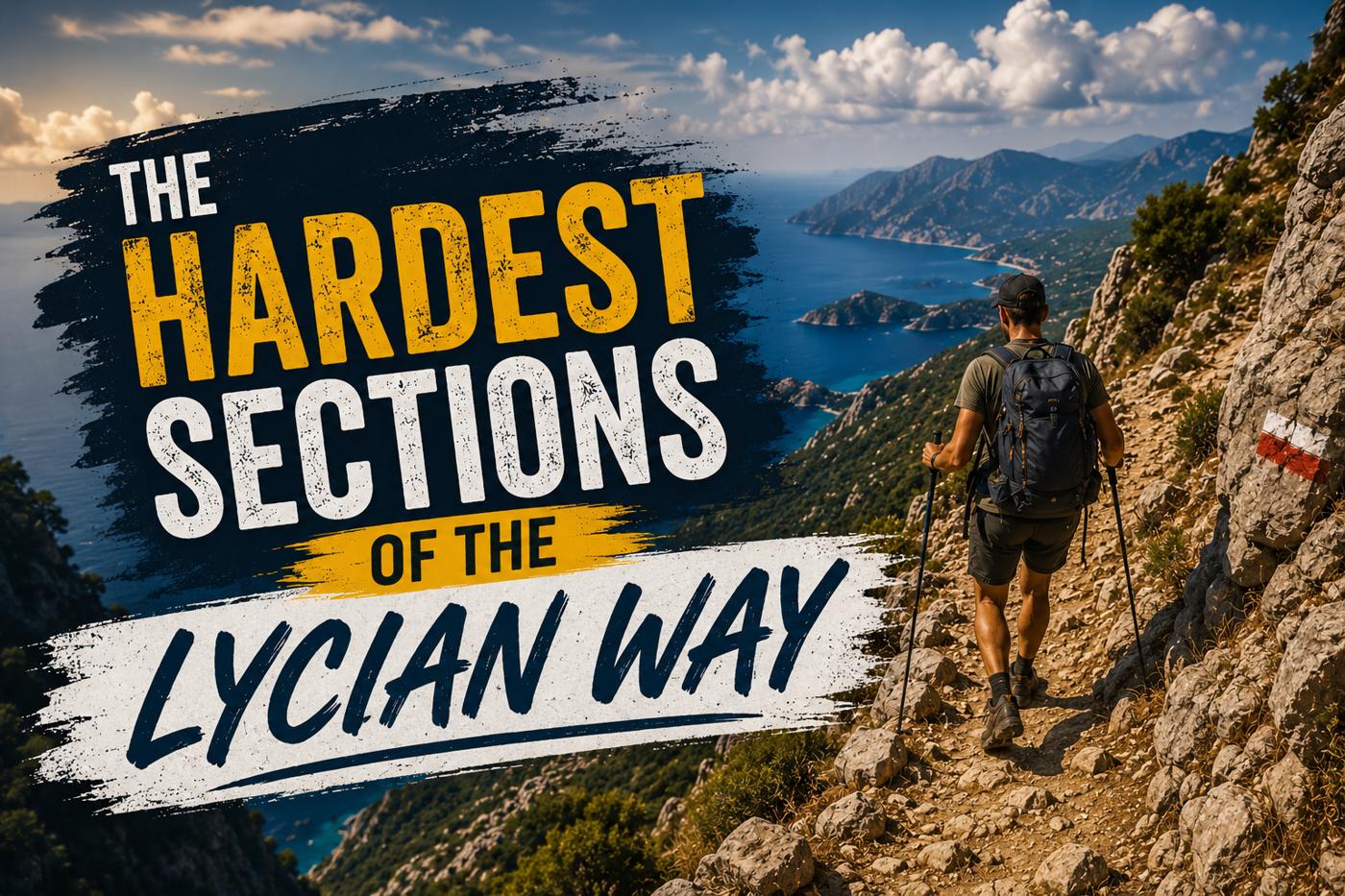
The Hardest Sections of the Lycian Way
The Lycian Way is widely considered one of the most beautiful long-distance hiking trails in the world. Stretching along Turkey’s Mediterranean coastline between Fethiye and Antalya, the route offers:
- dramatic sea cliffs
- mountain landscapes
- ancient ruins
- hidden beaches
- remote villages
But despite its beauty, the Lycian Way is not always easy.
Many first-time hikers underestimate how physically demanding certain sections can become. Steep climbs, rocky descents, Mediterranean heat, limited water sources, and long exposed coastal paths can quickly turn some stages into real challenges.
While most hikers can comfortably complete easier sections with basic preparation, a few parts of the Lycian Way are known for being significantly more difficult.
Here are some of the hardest sections of the Lycian Way — and why they challenge even experienced hikers.
1. Alınca to Kabak – Steep Descents and Intense Heat
The section between:
- Alınca
- Kabak
is often considered one of the most physically demanding parts of the entire trail.
Why?
Because the route combines:
- steep elevation changes
- rocky terrain
- exposed sun
- long downhill sections
The descent toward Kabak Valley can become especially difficult for hikers with:
- knee problems
- heavy backpacks
- poor footwear
During summer, the heat makes the challenge even more intense.
Why It Feels So Difficult
Unlike gradual hiking routes, this section constantly changes elevation.
Hikers often underestimate:
- how exhausting steep descents can become
- how slippery loose stones feel
- how quickly dehydration happens under direct Mediterranean sun
However, the reward is extraordinary.
The views over:
- Kabak Valley
- Mediterranean coastline
- surrounding cliffs
are among the most spectacular on the Lycian Way.
2. Karaöz to Gelidonya Lighthouse – Long Rocky Coastal Terrain
This section is famous for:
- stunning sea views
- remote landscapes
- one of the most iconic lighthouses in Turkey
But it is also one of the more demanding coastal stages.
The terrain includes:
- sharp rocky paths
- exposed cliffside sections
- uneven footing
- long sun exposure
The route toward:
- Gelidonya Lighthouse
feels isolated compared to more populated sections of the trail.
Main Challenge
The difficulty here comes less from elevation and more from:
- continuous rough terrain
- heat exposure
- physical fatigue over time
Water planning becomes especially important.
Many hikers begin this section too late in the morning and struggle during midday temperatures.
3. Beycik to Tahtalı Mountain (Mount Olympos)
For hikers looking for serious elevation gain, few sections compare to:
- Tahtalı Mountain
also known as:
- Mount Olympos
At approximately:
- 2,365 meters
this is one of the highest and most challenging optional routes connected to the Lycian Way.
The climb involves:
- steep mountain ascents
- rocky alpine terrain
- long hiking hours
- rapidly changing weather conditions
Why It’s Different
Unlike lower coastal sections, Tahtalı feels more like a true mountain expedition.
Temperatures can change dramatically depending on altitude.
This section requires:
- strong fitness
- careful preparation
- proper hiking equipment
However, the summit views above the Mediterranean are absolutely unforgettable.
4. Kaş to Aperlai – Endless Coastal Ups and Downs
At first glance, the section between:
- Kaş
- Aperlai
may not look extremely difficult on the map.
But many hikers are surprised by how exhausting this stage becomes.
The reason:
constant elevation changes.
The route repeatedly climbs and descends along the coastline, often with:
- rocky terrain
- sharp sun exposure
- limited shade
The Psychological Challenge
Unlike dramatic mountain climbs, this section becomes tiring because the trail never fully relaxes.
Hikers constantly move:
- uphill
- downhill
- uphill again
for hours beside the sea.
The Mediterranean scenery remains beautiful throughout the route, but physically the terrain slowly wears hikers down.
5. Gavurağılı to Bel – Difficult Mountain Climbs
The route between:
- Gavurağılı
- Bel
contains some of the steeper mountain sections on the Lycian Way.
This stage is known for:
- intense uphill hiking
- exposed mountain paths
- limited shade
- physically demanding climbs
The elevation gain surprises many hikers, especially during warm weather.
Why Experienced Hikers Respect This Section
The combination of:
- steep climbs
- heat
- long distances
creates serious physical fatigue.
Hikers carrying large backpacks often struggle here more than expected.
Fortunately, the panoramic mountain views become incredibly rewarding once reaching higher elevations.
6. Ovacık to Faralya – Tough for First-Time Hikers
Although extremely popular, the section between:
- Ovacık
- Faralya
can feel surprisingly difficult for beginners.
This is often the first real Lycian Way experience for many hikers.
The trail includes:
- rocky mountain paths
- steep uphill sections
- exposed coastal viewpoints
combined with strong Mediterranean heat.
Why Beginners Struggle Here
Many hikers begin:
- too late in the day
- with heavy backpacks
- carrying insufficient water
Because the scenery feels so beautiful, people sometimes forget how physically demanding the terrain actually is.
Fortunately, the panoramic views above:
- Ölüdeniz
- Butterfly Valley
make the effort worthwhile.
Heat Is Often the Real Difficulty
One important reality:
the Lycian Way’s biggest challenge is not always the terrain itself.
It is often:
- heat
- dehydration
- sun exposure
Mediterranean temperatures can become brutal during:
- July
- August
especially on exposed coastal sections with very little shade.
Even moderate stages can suddenly feel extremely difficult under:
- 35°C+ temperatures
This is why experienced hikers usually recommend:
- spring hiking
or - autumn hiking
instead of summer.
How to Prepare for Difficult Sections
If you plan to hike the harder parts of the Lycian Way, preparation matters greatly.
Important Tips
Start Early
Most experienced hikers begin:
- around sunrise
to avoid midday heat.
Carry Enough Water
Some sections have:
- long distances between water sources
Always carry more water than expected.
Use Proper Hiking Shoes
The rocky terrain destroys weak footwear quickly.
Good grip and ankle stability are extremely important.
Pack Light
Heavy backpacks make difficult climbs significantly harder.
Minimalist packing improves comfort enormously.
Use Offline Navigation
Some difficult sections also contain:
- confusing trail markers
- side routes
- faded signs
Offline GPS apps help avoid navigation stress.
Are the Hardest Sections Dangerous?
Generally, the Lycian Way is considered relatively safe for hikers.
However, difficult sections can become risky if hikers:
- underestimate the heat
- ignore hydration
- attempt unrealistic daily distances
- hike without preparation
Most problems involve:
- exhaustion
- dehydration
- minor injuries
rather than serious accidents.
Proper planning reduces most risks significantly.
Best Time to Hike Difficult Sections
The best seasons are:
- April
- May
- October
- early November
During these months:
- temperatures stay safer
- hiking becomes more comfortable
- landscapes look greener
Summer hiking on difficult sections can become extremely exhausting.
Final Thoughts About the Hardest Sections of the Lycian Way
The hardest sections of the Lycian Way are also often the most rewarding.
These challenging stages lead hikers through:
- dramatic mountain landscapes
- remote coastlines
- hidden valleys
- unforgettable viewpoints
Yes, some climbs feel exhausting.
Yes, Mediterranean heat can become brutal.
But overcoming these difficult sections is also part of what makes the Lycian Way feel so memorable.
Because the trail is not only about reaching destinations.
It is about earning the landscapes along the way. You can click here to go on tours.

Comment (0)