
Who Were the Lycians? A Brief History for Hikers
You are walking a rocky coastal path above the Mediterranean.
The sea below is the colour of turquoise glass. Pine trees line the hillside. A lizard crosses the path in front of you and disappears into the rocks.
Then you turn a corner and stop.
Carved directly into the cliff face, ten metres above your head, is a tomb. Not a pile of stones. Not a ruin. A fully formed facade — columns, decorative carvings, an inscription in a script you have never seen before — cut into the living rock two and a half thousand years ago.
Nobody put a fence around it. Nobody charged you to see it. It is just there, as it has always been, waiting for whoever happens to walk past.
This is what it means to hike the Lycian Way. And to understand what you are looking at, it helps to know who the Lycians were.
A People Unlike Any Other
The Lycians were an ancient civilisation who inhabited the southwestern corner of what is now Turkey — the rugged, mountainous peninsula between the modern cities of Fethiye and Antalya.
They were here for a very long time.
The earliest references to the Lycians appear in Hittite records from around 1400 BC. Homer mentions them in the Iliad, fighting on the side of Troy. Their civilisation flourished for well over a thousand years before being absorbed into the Roman Empire in 43 AD.
In that time, they built cities, created art, developed a unique writing system, and established a form of democratic government so sophisticated that the American Founding Fathers studied it when designing their own constitution.
They were also, by most accounts, fiercely independent.
Where Did They Come From?
This is a question historians have argued about for centuries.
Herodotus, the ancient Greek historian, claimed the Lycians originally came from Crete. Other ancient sources suggest they were indigenous to the region — that they had always been there, long before the Greeks arrived.
Modern genetic and linguistic research suggests the truth is probably somewhere in between: the Lycians were most likely a distinct people who developed in place over many centuries, absorbing influences from the Aegean, the Near East, and the Mediterranean world around them.
What made them unusual was how thoroughly they remained themselves.
Even after being conquered by the Persians in the sixth century BC, the Lycians continued to use their own language, maintain their own customs, and build in their own distinctive style. Even after Alexander the Great swept through the region in 334 BC, Lycian culture persisted.
They were not easy to absorb.
The Lycian Language
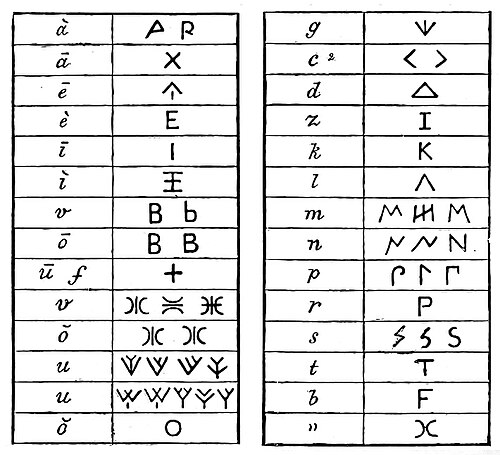
One of the most fascinating things about the Lycians is their language.
Lycian is an ancient Indo-European language related to Hittite and Luwian — languages spoken in Anatolia thousands of years ago. It was written in a unique alphabet of 29 letters, derived from but distinct from Greek.
Hundreds of Lycian inscriptions survive, carved into tombs and rock faces across the region. For centuries, nobody could read them.
The decipherment of Lycian in the nineteenth century opened up a world of funerary inscriptions, dedications to the gods, and records of civic life that had been silent for two millennia.
You will see Lycian inscriptions on tombs throughout the trail. Most record the name of the person buried, warnings against disturbing the tomb, and sometimes a list of family members permitted to be buried there.
They are remarkably personal for something carved in stone two thousand years ago.
The Rock Tombs
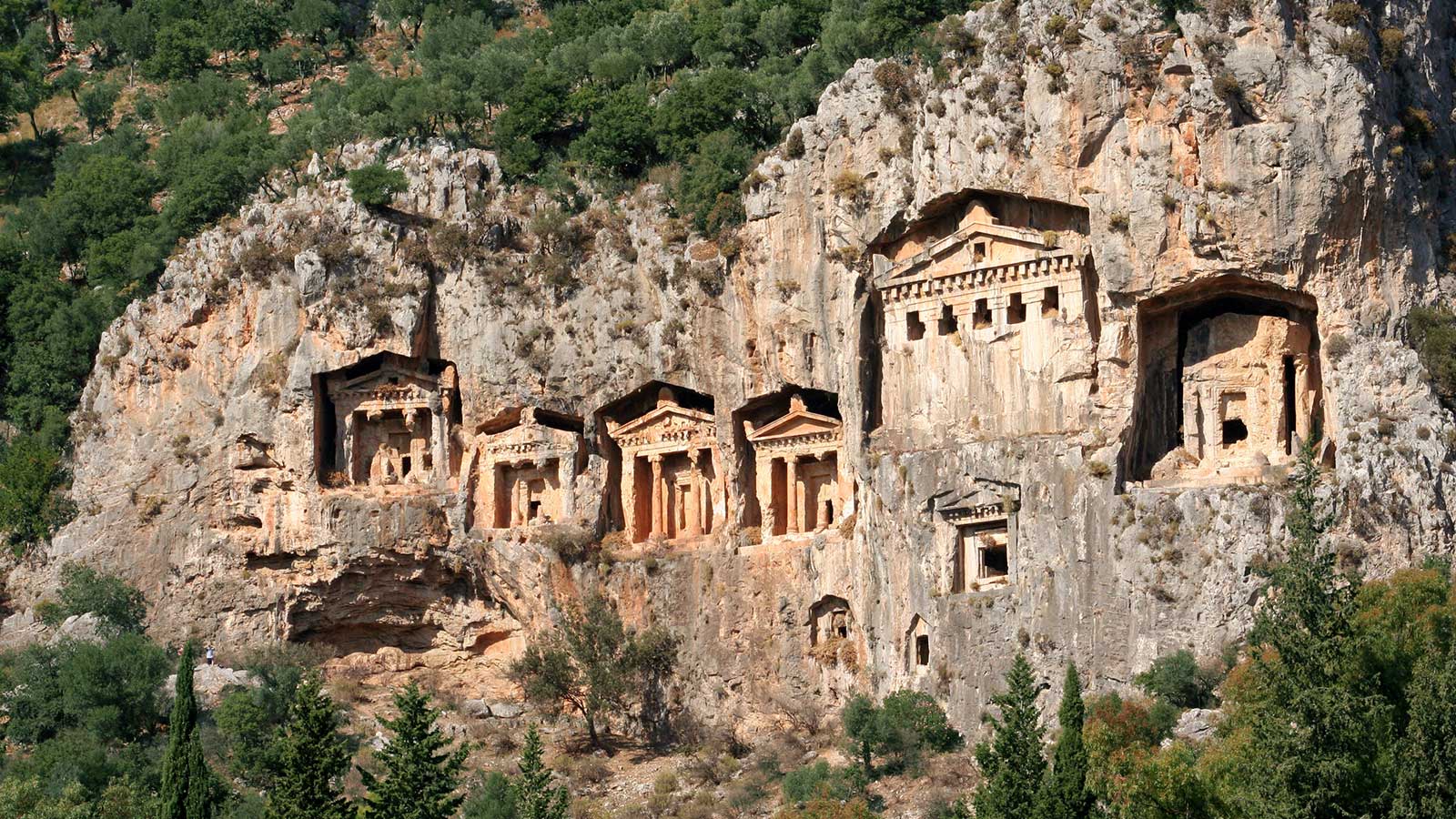
Nothing defines the Lycian landscape more than the rock tombs.
They appear throughout the Lycian Way — carved into cliff faces, cut into boulders, built as freestanding structures in the middle of ancient cities. Some are simple. Some are elaborate facades with carved columns and decorative friezes. Some are perched so high above the ground that the engineering required to create them seems almost impossible.
Why so high up?
There are several theories.
Some historians believe the Lycians placed tombs high on cliffs so that eagles — which the Lycians associated with the gods — could carry the souls of the dead to the heavens. Others suggest the height was practical: tombs placed above the town were harder to rob and safer from flood damage.
The most famous rock tombs are at Myra, near the modern town of Demre — an enormous cliff face honeeycombed with carved facades that look like a city of the dead stacked above the city of the living. But equally remarkable tombs appear throughout the trail, often in unexpected places, often with no signpost or explanation.
Part of the joy of hiking the Lycian Way is turning a corner and finding one you were not expecting.
The Lycian League
Perhaps the most remarkable thing about the Lycians was their system of government.
Around the second century BC, the cities of Lycia formed a federation — the Lycian League — that is widely regarded as one of the world’s first representative democratic governments.
Member cities sent representatives to a central council. Votes were weighted according to the size and importance of each city. Decisions about war, peace, taxation, and foreign policy were made collectively.
The system was so sophisticated and so ahead of its time that when the American Founding Fathers were debating the structure of their new republic in the 1780s, Alexander Hamilton and James Madison both referenced the Lycian League in the Federalist Papers as a model of how a federal democratic system could work.
A two-thousand-year-old civilisation on the Turkish coast influenced the constitution of the United States.
This is the kind of history you are walking through on the Lycian Way.
The Cities of Lycia
At its height, Lycia contained dozens of cities. Many of them sit directly on or beside the Lycian Way trail.
Xanthos
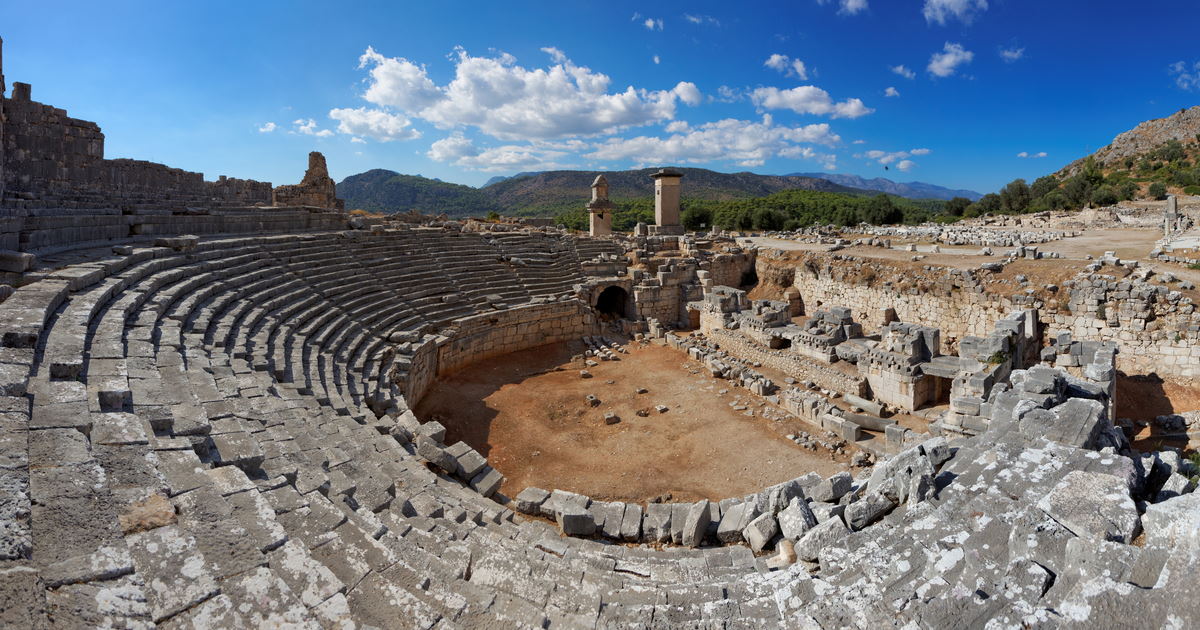
The greatest city in ancient Lycia, and its political capital. The site of a famous last stand in which the Lycians, facing conquest by the Persian general Harpagus, burned their own city and died rather than surrender. The ruins remain one of the most moving archaeological sites in Turkey.
Patara
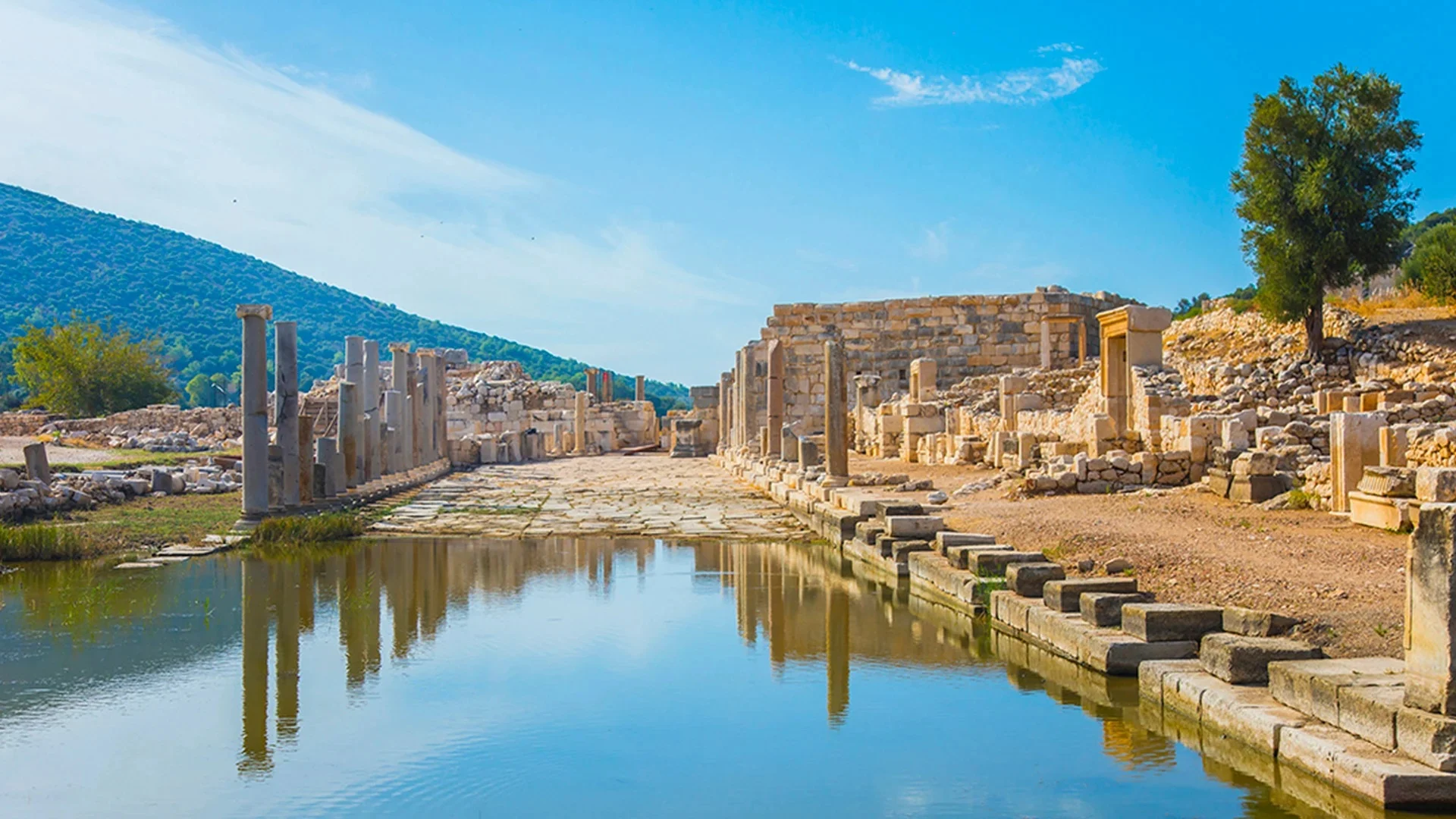
A major port city and the birthplace of Saint Nicholas, the historical figure behind the legend of Santa Claus. The ruins sprawl across a wide area beside Europe’s longest beach.
Myra
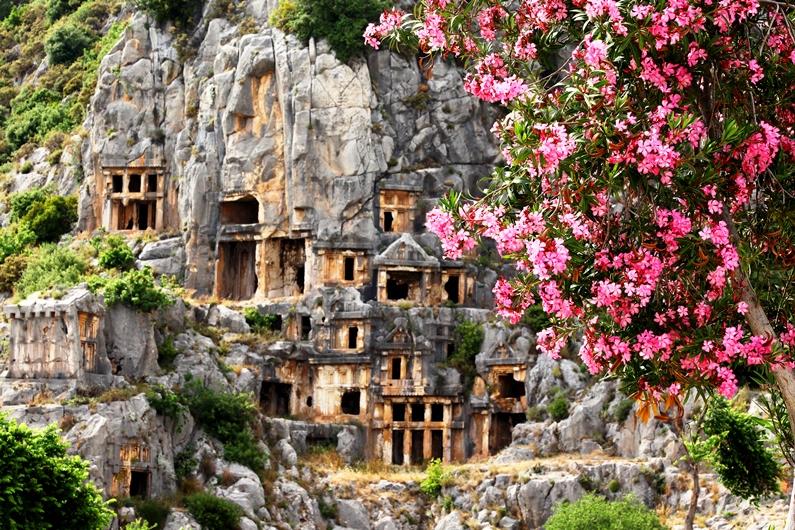
Famous for its extraordinary cliff tombs and its ancient theatre, still remarkably well-preserved. Saint Nicholas served as bishop here in the fourth century AD.
Olympos
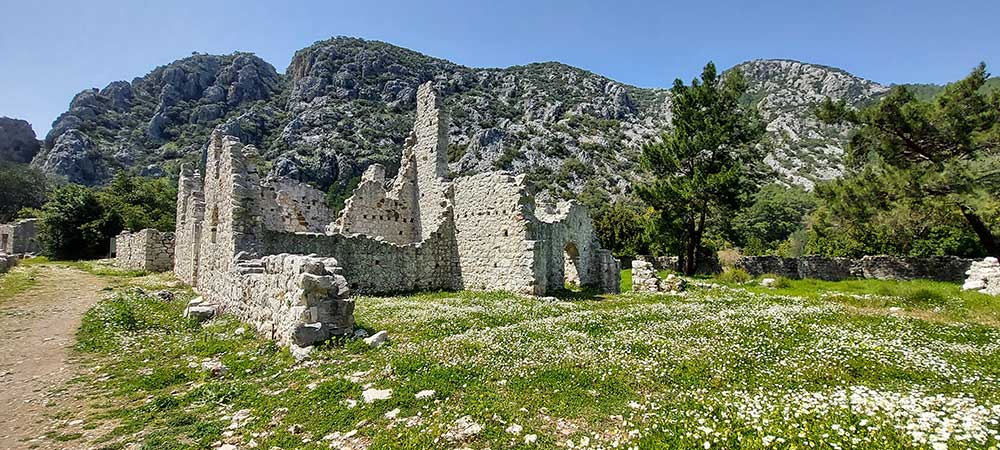
A mysterious ruined city in a river valley thick with vegetation, accessible only on foot. The ruins are tangled with fig trees and inhabited by turtles. One of the most atmospheric sites on the entire trail.
Simena (Kaleköy)
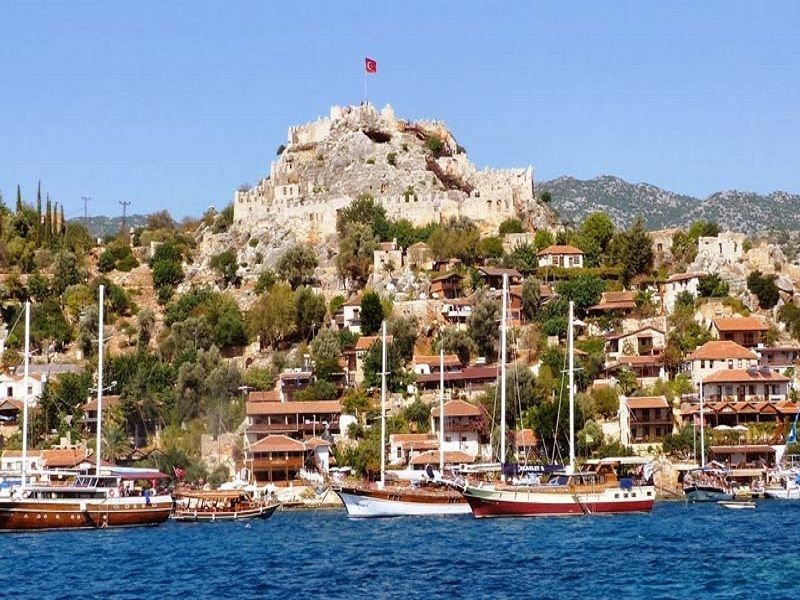
A tiny village built on and around an ancient Lycian and Roman site, accessible only by boat or on foot. A medieval castle sits above Lycian tombs. Below the waterline, the ruins of a sunken ancient city are visible through the clear water.
What Happened to the Lycians?
The Lycians were not conquered so much as gradually absorbed.
After coming under Roman rule in 43 AD, Lycian cities continued to flourish. Many of the most impressive ruins on the trail — theatres, baths, temples — are Roman-era constructions built on Lycian foundations.
Over the following centuries, as the Roman Empire became the Byzantine Empire and Christianity spread across the Mediterranean world, the distinctly Lycian culture slowly merged into the broader culture of the eastern Mediterranean.
The language faded. The tombs were repurposed or forgotten. The cities were abandoned one by one — some due to earthquakes, some due to shifting trade routes, some for reasons that are still not entirely clear.
By the medieval period, most of the great Lycian cities had been swallowed by forests and hillsides.
They waited there for centuries.
Waiting for archaeologists. Waiting for historians. Waiting for hikers walking a coastal path who would turn a corner and stop, and look up, and wonder who built this and why.
Walking Through History : Who Were the Lycians?
The Lycian Way is often described as one of the most beautiful long-distance trails in the world.
It is also one of the most historically rich.
Almost every day on the trail, you walk past something that was built, carved, or inhabited two thousand years ago. Not behind glass in a museum. Not reconstructed or restored. Just there — in the landscape, in the open air, exactly where it was left.
Knowing who the Lycians were changes how you see it.
The tomb on the cliff face is no longer just a curiosity. It is a family’s farewell to someone they loved, carved in stone so it would last forever.
The ruined city in the valley is no longer just a pile of ancient stones. It is a place where people argued about politics, watched plays, traded goods, and went home to their families at the end of the day.
The inscription you cannot read is someone’s name. Someone who stood in this same landscape, looked out at this same sea, and wanted to be remembered.
Two and a half thousand years later, walking the path they walked, you remember them.
Explore our guided Lycian Way tours — our guides bring the history of the trail to life every step of the way.

Comment (0)